Understanding Hyperhomocysteinemia
Metabolic Pathways of Homocysteine Regulation
The Role of Remethylation and Transsulfuration
Homocysteine is a key intermediate in methionine metabolism and is regulated through two major metabolic pathways.
In the remethylation pathway, homocysteine is converted back to methionine by the enzyme methionine synthase, a reaction that requires adequate levels of vitamin B12 and folate. In the transsulfuration pathway, homocysteine is converted into cystathionine and subsequently into cysteine. This process is catalyzed by the enzyme cystathionine β-synthase (CBS), which requires vitamin B6 as an essential cofactor.
The Impact of Metabolic Dysfunction
Maintaining the balance between these two pathways is essential for cardiovascular and cerebrovascular health. When either pathway is impaired or functions inefficiently, homocysteine metabolism is compromised, leading to elevated plasma homocysteine concentrations—a condition known as hyperhomocysteinemia.
The Clinical Significance of MTHFR Mutations
Enzymatic Impairment and Metabolic Efficiency
Homozygous mutations in the MTHFR gene significantly reduce the activity of the methylenetetrahydrofolate reductase enzyme. As a result, the conversion of folic acid into 5-methyltetrahydrofolate (5-MTHF), its biologically active form, is impaired. Consequently, even an adequate dietary intake of folate may not ensure sufficient production of active folate, compromising the remethylation of homocysteine.
Enzymatic inefficiency impairs remethylation, leading to chronic plasma homocysteine accumulation. This metabolic ‘clogging’ promotes hyperhomocysteinemia, exposing the patient to severe risks to vascular health.”

HYPERHOMOCYSTEINEMIA
Clinical Implications and Pathophysiology
Cerebrovascular Risk and Small Vessel Disease
Hyperhomocysteinemia is recognized as an independent risk factor for cerebrovascular disease and contributes to endothelial dysfunction, particularly affecting small cerebral vessels. Elevated plasma homocysteine concentrations have been associated with an increased risk of ischemic stroke and the progression of cerebral small vessel disease, both of which are important contributors to vascular cognitive impairment (Obeid et al., 2017; Zhang et al., 2021).
Cerebrovascular diseases: hyperhomocysteinemia is responsible for damage to small cerebral arteries. Patients with hyperhomocysteinemia exhibit a four-fold increased risk of developing cerebral venous sinus thrombosis (Martinelli, 2003). Furthermore, a strong correlation is observed between hyperhomocysteinemia and the risk of developing ischemic stroke events (Wald, 2006).
Cardiovascular Complications and Thrombotic Risk
Beyond its effects on cerebral circulation, hyperhomocysteinemia contributes to systemic vascular damage by promoting endothelial dysfunction and accelerating atherosclerotic processes. Clinical evidence supports an association between elevated homocysteine levels and an increased risk of thromboembolic events, including deep vein thrombosis and coronary artery disease. These findings highlight the importance of appropriate management strategies aimed at reducing long-term cardiovascular risk (Moretti et al., 2017; Humphrey et al., 2020).

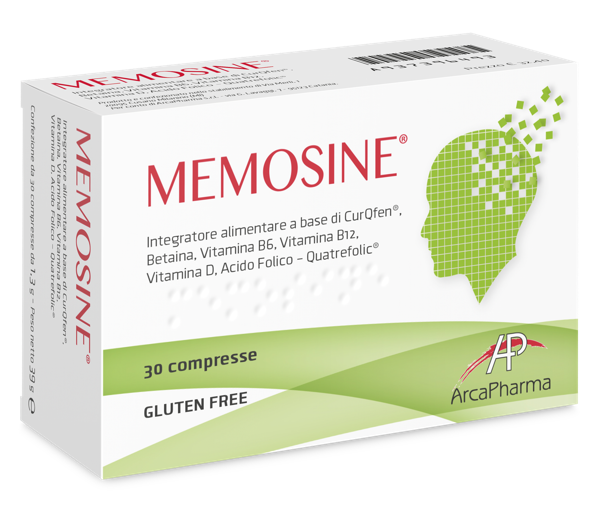
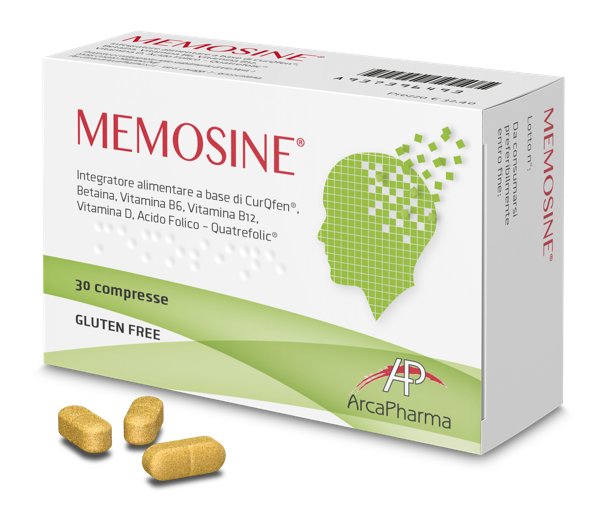
MEMOSINE reduces the levels of HOMOCYSTEINE
Turmeric
- Native indian plant, belong to the ginger family
- Curcumin is extracted from the dried and ground root
- It is one of the components of curry
- Used in traditional Asian medicine
- Antioxidant and anti-inflammatory properties, useful for a large group of diseases
- Indian populations have low incidence of dementia
- Epidemiological data suggest that the high consumption of turmeric among Indian populations is associated with a lower incidence of certain diseases, supporting the hypothesis that curcumin may play a potential role in counteracting some of the adverse vascular effects associated with hyperhomocysteinemia.
Pinto, D. S., et al. (2020). Curcumin and its potential effects on the cardiovascular system and hyperhomocysteinemia: A review of molecular mechanisms. Journal of Nutritional Biochemistry, 82, 108405.
Zullo, G., et al. (2022). Homocysteine, Endothelial Dysfunction, and Degenerative Pathologies: State of the Art. Journal of Clinical Medicine, 11(13), 3745.
Ng T.P., Chiam P.C., Lee T., Chua H.C., Lim L., Kua E.H. Curry consumption and cognitive function in the elderly. Am. J. Epidemiol. 2006;164:898-906.
CurQfen®

It is a formulation based on free curcuminoids under amorphous form, embedded within a soluble fiber matrix derived by fenugreek that allows curcuminoids absorption, in a free form, directly by the intestines.
- 100% natural
- curcuminoids absorption under a free form
- Pharmacokinetics: 24 h
- Able to cross the blood-brain barrier
VITAMIN D
Biological functions of vitamin D
The Role of Vitamin D in Hyperhomocysteinemia (HHcy) Management
The Role of Vitamin D in Hyperhomocysteinemia (HHcy) Management
- Metabolic Regulation: Vitamin D may contribute to the maintenance of homocysteine homeostasis, potentially helping to regulate elevated plasma homocysteine levels(Vojinovic et al., 2020).
- Endothelial Protection: Vitamin D may support vascular function by reducing oxidative stress and contributing to the preservation of endothelial integrity in the context of HHcy (Zullo et al., 2022).
- Neuronal Protection: Vitamin D may help counteract glutamate-mediated excitotoxicity and neuroinflammatory processes associated with elevated homocysteine levels.
- Potential Protective Synergy: Through its neurotrophic and neuroprotective effects, Vitamin D may contribute to the preservation of neuronal function and blood-brain barrier integrity in conditions associated with hyperhomocysteinemia.
Recommended vitamin D daily dose
The recommended dose ranges from 400 to 1000 I.U. per day
- 1 I.U. corresponds to 0.025 mcg of cholecalciferol
- 1 mcg of cholecalciferol corresponds to 40 I.U.
- MEMOSINE contains 25 mcg of cholecalciferol per tablet
- 25 mcg corresponds to 1000 daily units, the recommended dose
MEMOSINE contains 1000 units of VITAMIN D per tablet